
Best Golf Hitting Mats in Australia
A detailed comparison for home simulators, mobile simulators, and driving range practice (NSW + Australia-wide) ↗
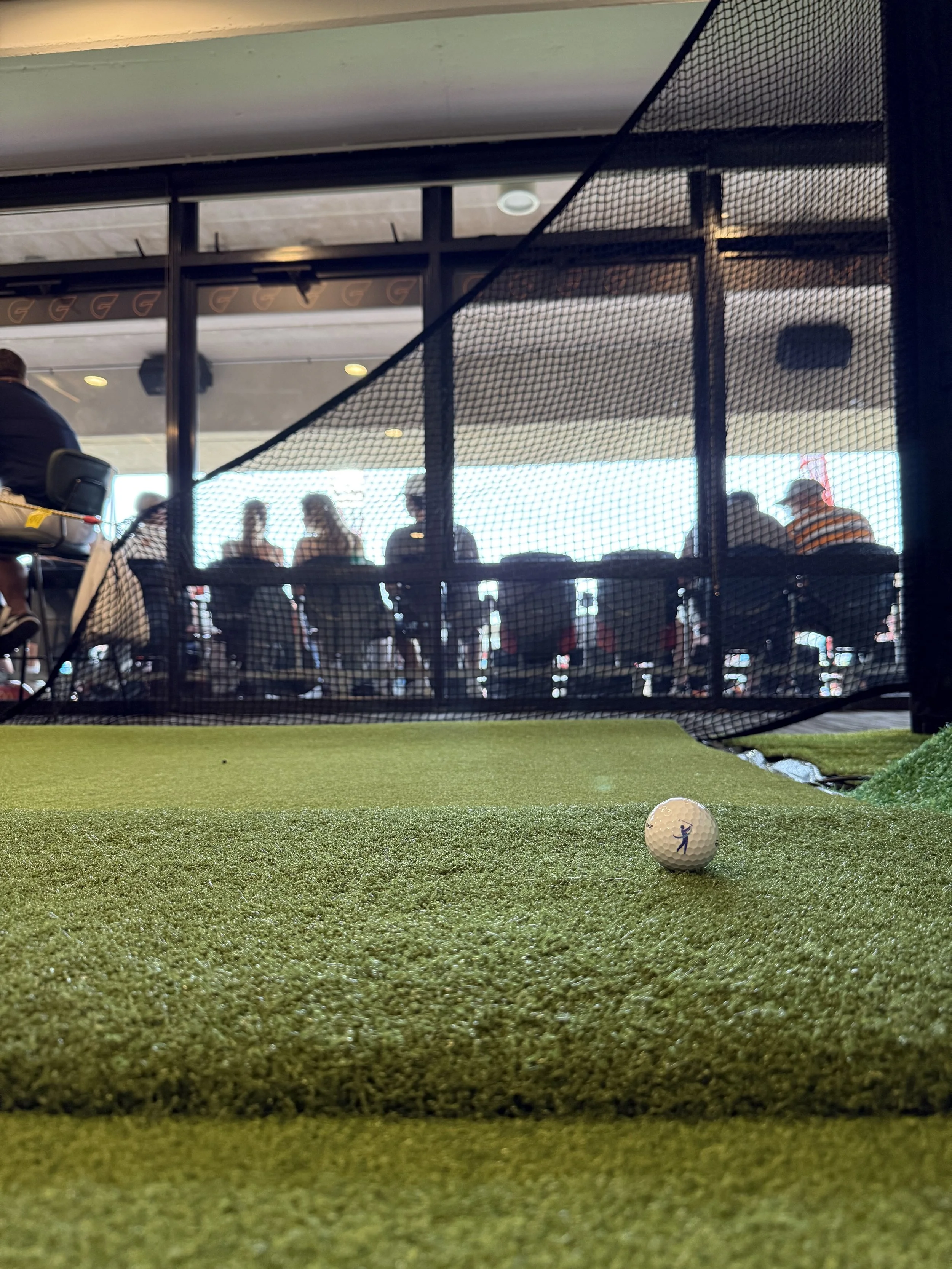
A golf mat changes the ball strike, feedback, and how your body feels after practice. Buy the wrong mat and you train around the wrong feelings. Use this guide to choose a mat system that matches your volume, surface and goals.
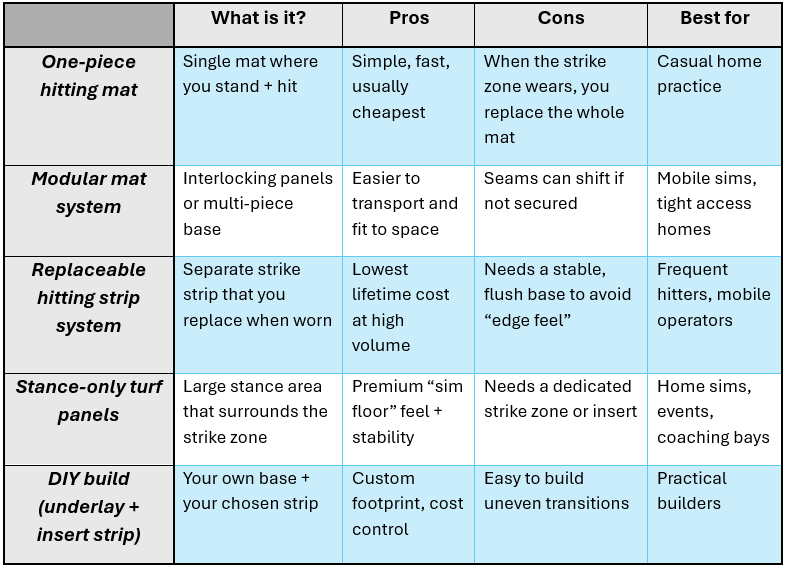
Quick Comparison Table
How to choose a golf mat
1) Joint comfort (wrist, elbow, shoulder)
Shock travels into the wrists and elbows if the golf mat fails to absorb impact. That’s why backing material and construction determine if you’re joints will feel sore after a session.
Why EVA helps: EVA is a closed-cell foam. It essentially compresses on impact and rebounds, this quality makes it excellent in absorbing shock whilst keeping the surface of the mat stable.
2) Fat-shot behaviour (bounce and “grab”)
Cheaper quality mats can cause the club head to bounce into the ball and change your delivery. A mat that’s too firm or too slick can bounce the leading edge of the golf club into the ball. Better mats tend to have higher degrees of EVA foam density and so the rebound effect is minimised. Importantly, mats with higher EVA foam density can still provide honest and valuable feedback that’s beneficial to the average golfer.
3) Real tee support
From our experience operating a mobile golf simulator across NSW and Australia, we find that people love to swing their driver hard and compare carry distances with mates. To make games like “who has the longest drive?” possible, we’ve identified that both tees and tee holes are crucial for accuracy and repeatability.
Tall tee turf in a golf mat can grip real tees well and provides the user with additional stability as they prepare to swing their driver. Likewise, finished tee holes of a median sized diameter will also improve the stability of tees. If tee holes are not laser cut, heat sealed and reinforced underneath then they tend to fray and loose quickly.
4) Durability and wear pattern
Due to the consistent striking of golfers, the golf mat will often lose its structure at the site of repeated impact. This is first at the strike zone and second, it’s where the feet are placed on the stance mat. If your golf mat undergoes a high volume of hits, then plan for the expected wear and tear by purchasing a system that lets you replace the strike zone without having to replace the golf stance mat.
5) Portability and setup speed
Mobile golfers and mobile simulator operators need a system that packs down fast and survives transport. Modular systems and replaceable strike zone mats can reduce downtime because you can swap the worn component on-site.
6) Stability and slip resistance
If your golf mat tends to creep on a hard floor, then it’s likely your stance and ball strike will lose it’s consistency. Some methods of improving the stability and reducing the slippage of the mat are:
To purchase a golf mat with a heavier base, this will provide stability
To use non-slip bases such as NBR which comes at a cost but provides support against slippage.
To have the strike zone connected (glue, velcro or modular set-up) to the golf stance mat. This will also improve minimise slippage of the mat.
7) Noise
Hard floors, such as those in the garage or warehouse, can amplify the sound of an impact. Thicker foam and an underlay can reduce the noise by damping vibration, however, most noise in a golf simulator set-up actually comes from the thickness of the impact screen. If you’re finding that neighbours or family members complain of the noise when you practice golf, consider upgrading your impact screen in the first instance and then evaluating your golf mat.
8) Outdoor vs indoor performance
Using your golf mat outdoors can add moisture, heat and UV exposure over time. These elemental changes reduce the life expectancy of your golf mat. By contrast, golf mats housed indoors are subject to more predictable elemental changes and therefore they often last longer than outdoor golf mats.
9) Cleaning and maintenance
As you have already seen at your nearby driving range, there’s plenty of golf strike zones around, some with tall grass and some with short. Tall grass appears to look more premium, however, as a result it tends to trap more debris.
Whether you decide to get a golf mat with short or tall grass, plan to vacuum occasionally and spot clean.
Nylon vs PP Turf in your golf mat
Nylon: The common choice for Strike Zones
Nylon often outperforms PP grass in the strike zone due to the way it behaves under repeated club impact.
Nylon fibres generally hold up better under repeated impacts and maintain a more consistent hitting surface over time. Many buying guides and simulator guides position nylon as the more durable option and the better “feel” for frequent practice. Some benefits of using nylon in the strike zone are:
More consistent strike interaction over time. Generally, club bounce on golf turf tends to increase with use, however, nylon has properties that resist club bouncer better than PP grass.
Better for high-volume hitting zones. The strike zone takes most of the impact, Nylon’s structure enables it to tolerate that wear better than PP in many consumer mat constructions.
PP: The common choice for Stance Mats
PP grass tends to work well for stance coverage and larger areas due to it being both cost effective and also durable under foot traffic. Many guides position PP as suitable for casual use and find it’s often less “realistic” than nylon when used as the primary hitting surface. Due to this, our team use a special custom-made stance mat that consists of PP grass and we pair this with a replaceable nylon grass strike zone. We have seen tremendous results using this setup and encourage you to use nylon where you strike the ball and PP grass as your stance mat.
Why EVA foam density matters
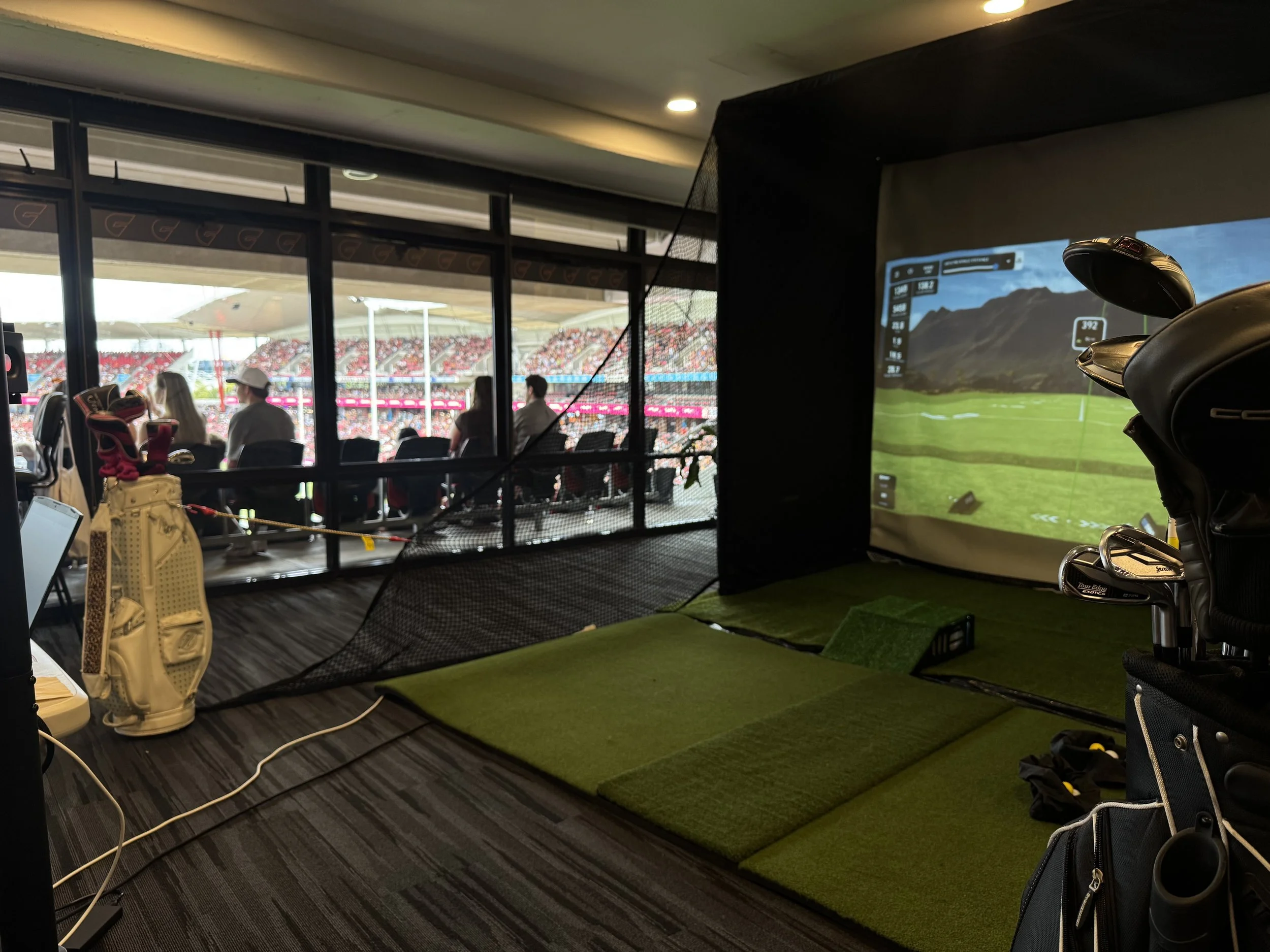
Foam density influences firmness and resilience, not just the quality and apparent thickness of the mat. Higher density EVA tends to feel firmer and supports weight better because it compresses less under load.
Here’s why that matters:
Foot stability: If the stance area compresses unevenly, your weight shifts and your strike will certainly change, producing inconsistent results.
Flush transitions: A firmer, higher-density base helps keep the strike zone and stance area aligned, reducing the edge feel from an elevated mat.
Impact damping: EVA absorbs shock and that’s why it’s essential in golf mats. The density of the EVA controls exactly how much the EVA can compress before it rebounds.
Make it stand out
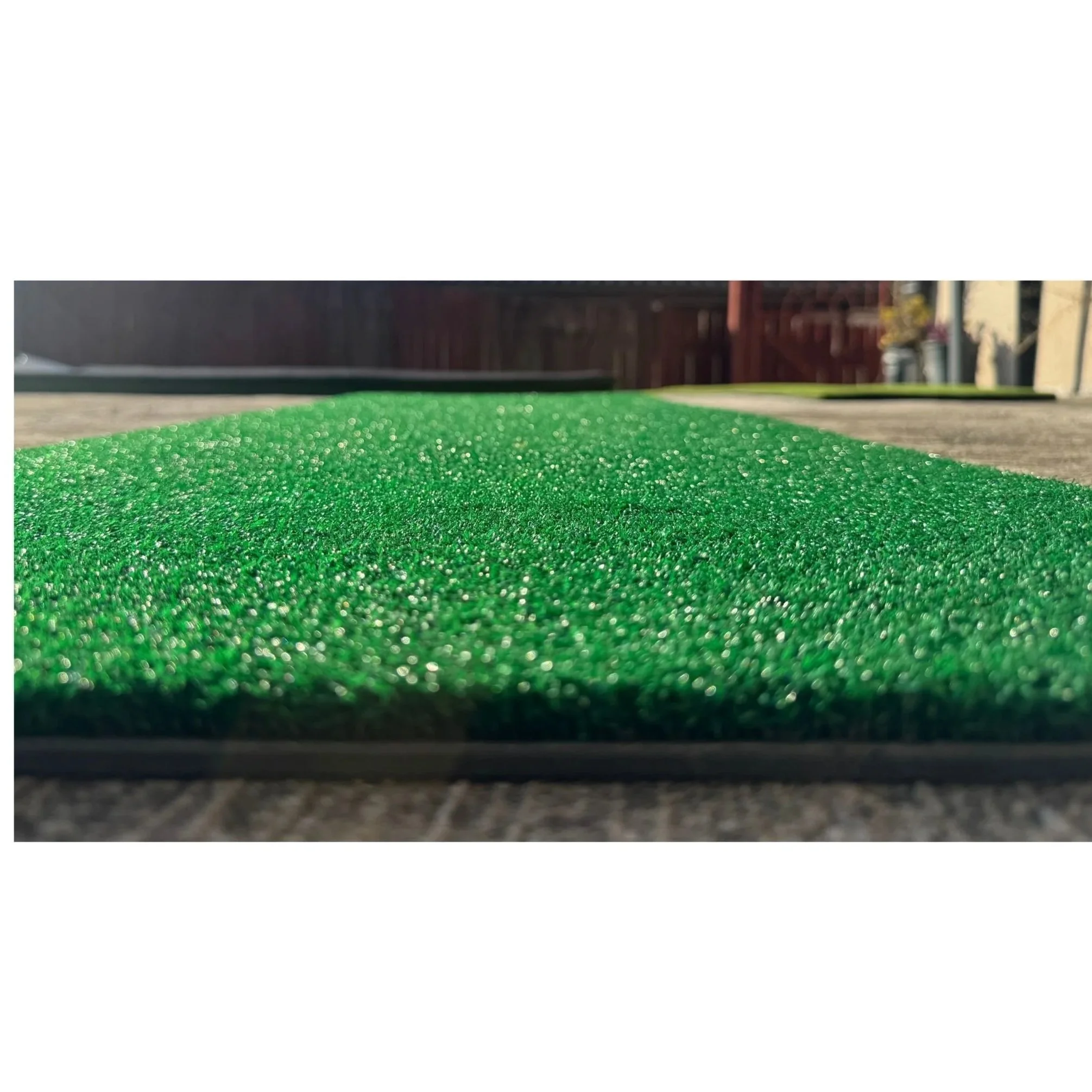
At The Pop Up Golf, we have found that the most comfortable and practical option for our mobile golf simulator setup is a 20mm EVA base with a density of 85kg/m³. This is firm and supportive for our customers to provide them with honest feedback whilst still cushioning the impact sufficiently to reduce the risk of injuries.
Online products we offer
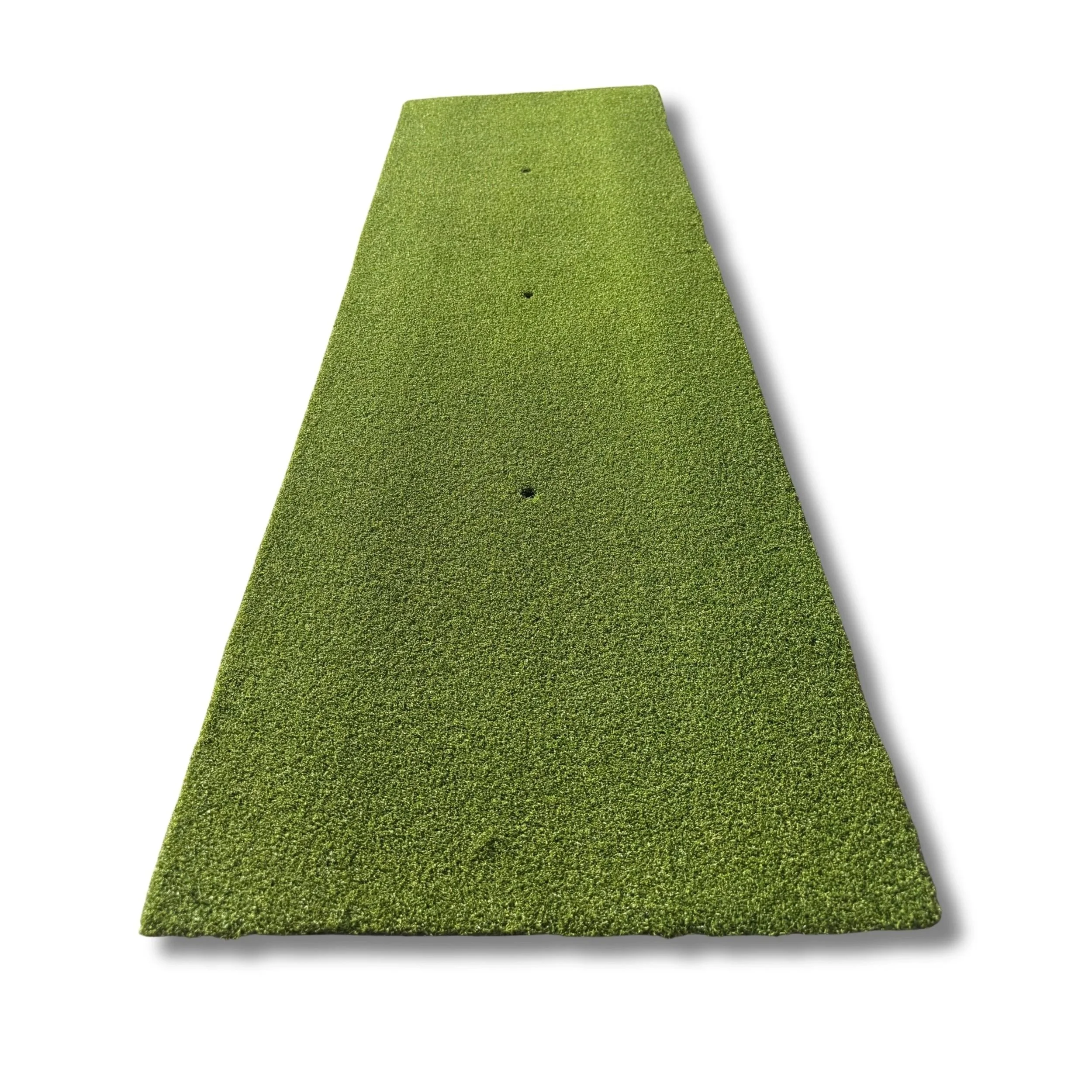
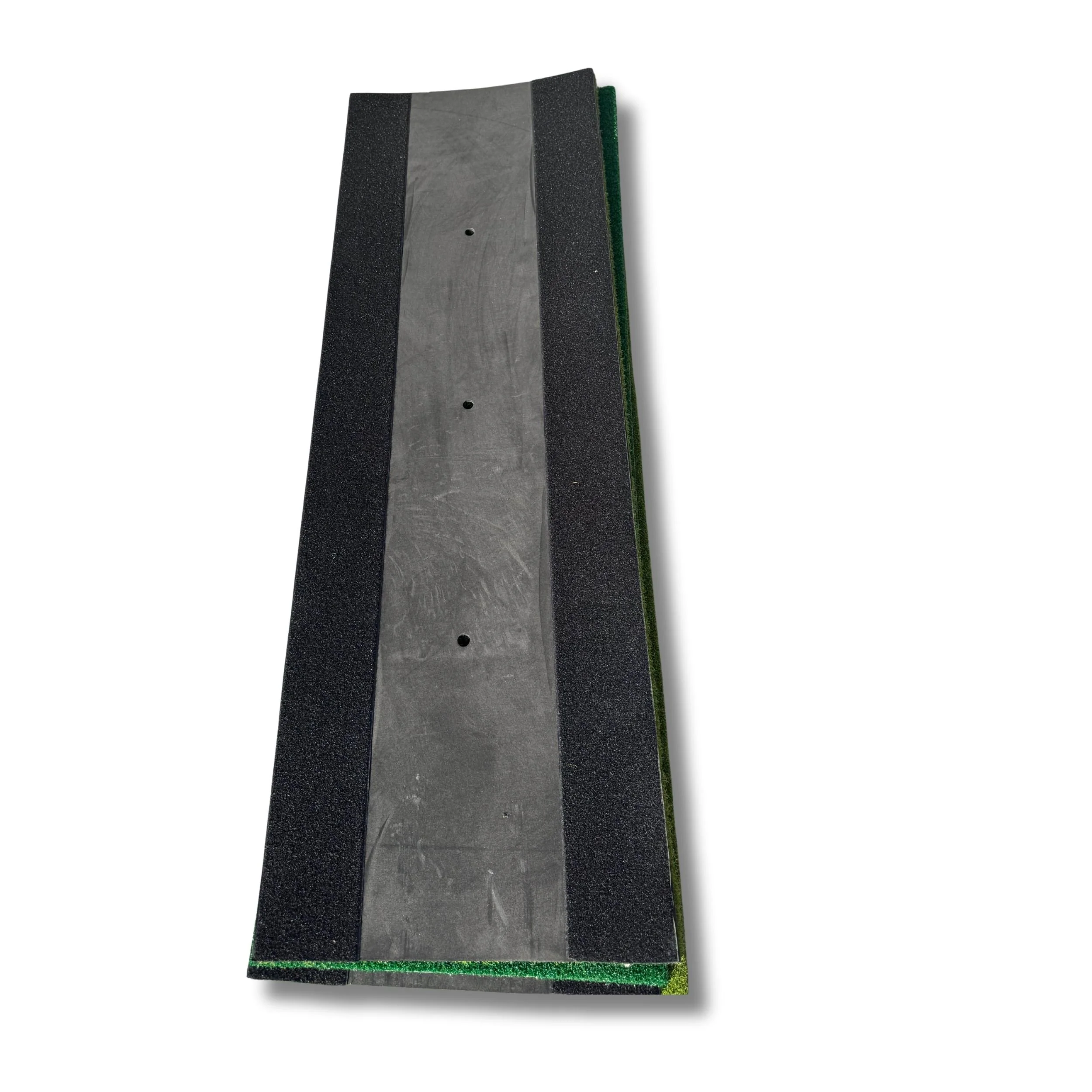
Replacement Tee Strip (The Pop Up Golf)
Specs:
✔ Dimensions: 50cm x 150cm
✔ Base: 20mm EVA foam
✔ Turf: 40mm nylon grass for tees, 16mm nylon grass and 16mm PP grass for irons and woods off the turf
✔ Tee support: 3 tee cutouts, laser cut + heat sealed. Approximately 16-18mm in diameter so that it can support real tees.
Our design makes sense because as we’ve discussed, the strike zone is often the first part which fails. A dedicated hitting strip means we can easily replace the wear point with several options instead of replacing the full mat. Additionally, the heat-sealed holes reduces fraying of the material. Finally, we have several tee options available to cater to a range of budgets and requests.
Golf Stance Turf (The Pop Up Golf)
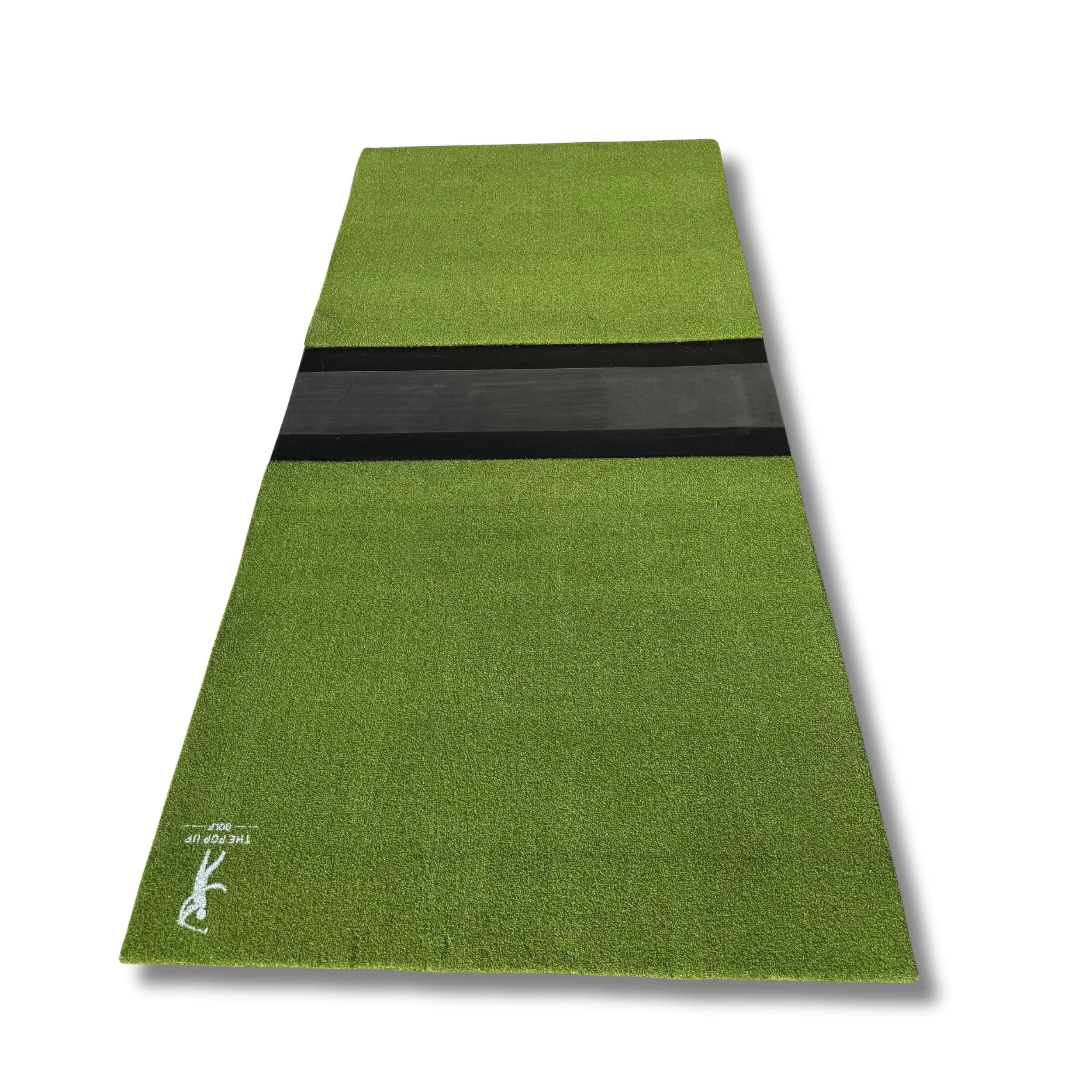
✔ Two panels: 150cm x 125cm each (total stance coverage: 150cm x 250cm) to fit our mobile golf enclosure
✔ Base: 20mm EVA foam, 85kg/m³ density
✔ Turf: 16mm PP grass (stance surface)
From our experience, the stance turf has a notable impact on the usability of your golf mat. It creates a stable standing surface, improving repeatability and reduces slipping. You have probably observed this yourself when you visit your nearest driving range and see the stance turfs which have clearly been used and have permanent footmarks indentations from where people swing the clubs from. The turf we provide is tried and tested in our mobile simulators and work great for home golf simulators, golf coaching bays and events too.
Mat types compared in detail
1) One-piece hitting mats
Why people buy them: Simplicity. Just unroll it and start hitting, easy as that.
Why people outgrow them: the strike zone takes all the wear. Once the fibres of the strike zone have signs of fatigue, now you have to budget for an entire mat replacement.
Best for: golfers who hit occasionally and want the simplest setup.
2) Modular mat systems
Why they work: you can scale the footprint to match your space and it’s also very easy to transport each of the separate parts.
Easier to transport
You can modify the system to match your simulator’s footprint
Only replace sections over time
Why they fail: The click-in design of the panels creates movement of the panels. If the modular mat system is not a perfect fit, then your stance changes and this leads to inconsistent strikes.
Best for: mobile golf setups and homes with narrow access.
3) Replaceable hitting strip systems
Why they win on value: they match how mats actually wear. For most golfers, the strike zone wears before the stance area, so it makes sense to have a system that can replace the hitting strip independent of the stance area.
Why installation matters: if the strip sits proud or sinks in, it can cause changes to strike and also create a tripping risk.
Best for: frequent hitters, coaching and mobile golf businesses.
4) Stance-only turf panels
Why they feel better: you stand on a larger consistent surface and your fit sit level.
Why they need a strike solution: a stance turf is not designed to take repeated iron strikes in the same spot. Therefore, while this option may be cost-effective, it should be paired with a dedicated strike zone for comfort and longevity.
Best for: home simulators, corporate events and golf coaching bays.
5) DIY builds (underlay + insert strip)
Why it works: you’re in complete control of the footprint and cost
Why DIY setups can disappoint: If you build a base that is not perfectly flush at the strike zone, you will feel edges and this will affect your contact consistency.
Best for: practical buyers that are comfortable with creativity and customisation.
Price guide in Australia
Prices for golf mats in Australia vary by size, backing construction and stock. Use the price guide below as a decision range, not a guarantee.
$180 ~ $249 for basic 1.5m x 1.5m practice mats in Australian retail stores.
$299 ~ $699 for commercial-style 1.5m x 1.5m mats.
$300 ~ $395 custom commercial-sized mats that are marketed for home use.
Commercial components: hitting strips and stance mats also sell as separate components in commercial catalogues, supporting the replaceable-parts model.
The practical takeaway is if you hit high volume then focus on what the lifetime cost of your purchase will be. Replaceable strike zones win in this regard as it’s use and replacement is solely dictated by your care of the strike zone and the frequency of hits.
Recommended setup for your use case
Home Simulator
Prioritise comfort, noise control and realistic driver practice. The common winner for a home golf simulator is a stance turf + replaceable teeable strike strip.
Mobile golf simulator operators
Prioritise portability, fast pack-down and field replacement. From our experience setting up our mobile golf simulator at parties and events, always carry a spare strike strip.
Driving range practice / indoor golf bay
Prioritise durability and consistent feedback. Driving ranges and indoor golf simulator stores go through a high-volume of hits daily. As we know the strike zone wears much faster than the stance mat, it’s recommended that these facilities invest in a replaceable strike zone. This option has a higher upfront cost than a one-piece golf mat, although it’s benefit becomes clear when you consider the lifetime savings of only replacing what’s worn out.
We’re building relationships with complementary businesses across the events and entertainment spaces and would love to hear from you, reach out through our enquiry form ↗
Ready to bring virtual golf to your next event? Explore The Pop Up Golf packages ↗ or book a complimentary consultation ↗ to discuss your space and goals.
-
You can buy online Australia-wide or search “golf hitting mat near me” to find local suppliers. If you hit shots often, choose a setup with replaceable strike zones so you can maintain feel without the cost of replacing the full mat.
-
Chose a stable mat with shock-absorbing backing and enough compliance to reduce shock. EVA foam helps because it absorbs impact and rebounds, reducing the stress on joints.
-
If you want stability under your feet and a premium simulator feel, stance turf improves the setup. Many serious setups use stance turf around a replaceable strike zone.
-
Nylon often performs better as the strike surface because it tends to maintain a consistent hitting surface under repeated impacts. PP works well as a stance mat due to it being more cost effective.